
Better radiator output without avoidable guesswork
Repair assessed first
We check valves, flow and condition before suggesting replacement.
Sizing considered carefully
We select new radiators around the room and existing system.
Balanced after fitting
We vent, leak-test and balance the system for useful heat output.
Deal with leaks, cold patches and poor output
A radiator that stays cold at the bottom, leaks from a valve or never warms with the rest of the system needs more than another turn of the thermostat. We check the radiator, valves, flow and circulation to understand why heat is not moving as it should. Trapped air, poor balancing, corrosion and failed valves can produce similar symptoms, so the right repair depends on what we find. Where the radiator remains sound, a valve repair, venting or system adjustment may resolve the fault. If corrosion or damage makes replacement more sensible, we explain the reason clearly.

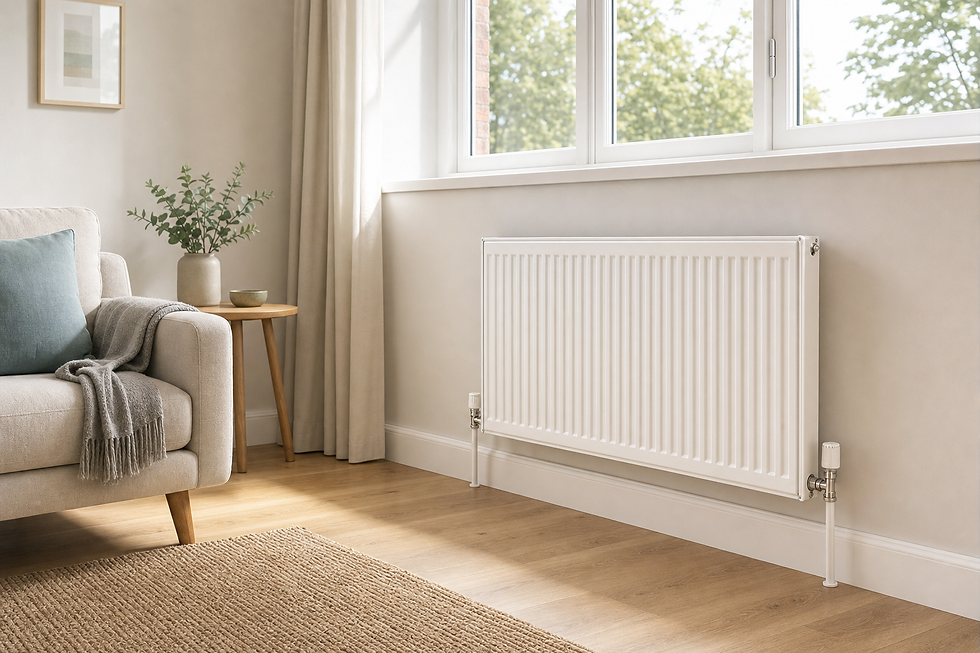
Fit new radiators for effective heat distribution
For a new radiator, we consider room requirements, position, pipe connections and compatibility with the existing heating system. Correct sizing helps the room warm properly without placing an unsuitable demand on the system. We fit the radiator, connect it and refill the affected pipework. We then vent trapped air, test every disturbed joint and balance the system where required. These checks help heat distribute effectively rather than simply proving the new radiator gets warm. We also undertake heating and refurbishment work for builders and larger projects in Scotland.
Frequently asked questions
Why is my radiator cold in one section?
Cold areas may point to trapped air, restricted flow, sludge or poor balancing. We check the radiator and wider circulation pattern to decide whether adjustment, repair or further system attention is needed.
Can a leaking radiator valve be repaired?
Often, yes. We inspect the valve, connection and radiator condition to find where water is escaping. A failed valve or seal may be replaceable, while corrosion can make a larger replacement necessary.
How do you choose a replacement radiator?
We consider the room's heating requirement, available position, pipe layout and compatibility with your system. After fitting, we fill, vent and test the radiator, then balance the heating where required.